Industry guide

General manufacturing and OEM motor testing guidance

Connect production motors, assemblies, test benches, quality gates, operators, fixtures, and production records to method fit, documentation needs, and support expectations for General manufacturing and OEM.

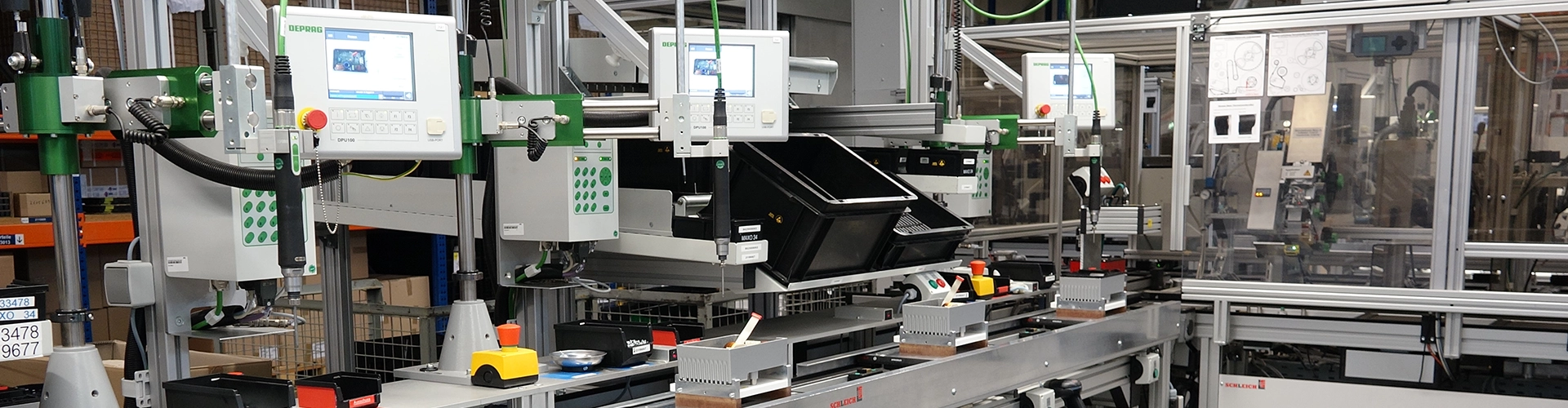
Installed Schleich production test system on a manufacturing floor

Industry guide

Motor testing guidance for General manufacturing and OEM.

OEM test engineers, production leaders, quality teams, and mixed technical stakeholders need a testing path that connects production motors, assemblies, test benches, quality gates, operators, fixtures, and production records with documentation needs, method limits, product fit, and support expectations.

Industry-specific application review

Manufacturing teams need application-led testing guidance because the same method can mean different things in engineering, production, quality, or service. MDS keeps the conversation useful without relying on customer-specific examples or unapproved performance claims.

Real-world context

General manufacturing and OEM testing context

Installed Schleich production test system on a manufacturing floor

Operating environment

Repeatability, operator workflow, product release, support, and documentation should guide the product conversation.


Motor winding diagnostic setup with leads and test instruments on a bench

Method selection

Each method needs to be matched to the asset, process, and decision.

Motor repair testing context with a Schleich MotorAnalyzer3

Support path

Support matters because the test system must keep working inside a real production process.

Quick knowledge

Read the application before the product conversation.

Use these points to decide whether the route is answering a method question, an industry question, a product-fit question, or a support question.

Industry pressure

The environment changes the test plan.

Repeatability, operator workflow, product release, support, and documentation should guide the product conversation.

Assets in view

Start with the motors and machines.

Production motors, assemblies, test benches, quality gates, operators, fixtures, and production records.

Documentation need

Records and review paths matter early.

Process fit, records, production integration, and quality evidence should be part of the specification conversation.

Next move

Use the matrix before choosing a route.

Compare methods for this industry, then confirm product fit, support expectations, and documentation needs with MDS.

Industry problem

Why motor testing changes for General manufacturing and OEM.

General manufacturing and OEM environments create a different motor testing conversation than a broad catalog overview can handle. The team may be dealing with production motors, assemblies, test benches, quality gates, operators, fixtures, and production records, but the deeper question is how the method, product path, documentation need, and support model fit the real work.

OEM test engineers, production leaders, quality teams, and mixed technical stakeholders do not all arrive with the same question. One reader may be evaluating a production process. Another may be trying to improve service records. Another may be comparing product families. Each path should make the next step clear without turning the guide into a catalog.

Manufacturing teams need application-led testing guidance because the same method can mean different things in engineering, production, quality, or service. That is why the path starts with the operating environment, then shows how methods and products map to real decisions.

The industry guide explains the industry-specific problem, then routes the reader into the method matrix, product paths, Service / Support route, and application-specific solution routes.

Operating context

What changes for General manufacturing and OEM.

Repeatability, operator workflow, product release, support, and documentation should guide the product conversation. That pressure shapes the testing conversation. A shallow explanation says MDS serves the industry. A useful explanation shows how the testing decision changes because of the industry.

Asset context matters: production motors, assemblies, test benches, quality gates, operators, fixtures, and production records. Those details help teams see that method selection is not abstract. It is tied to the motor, the process, the records, the operator, and the support expectations that follow the system after purchase.

Process fit, records, production integration, and quality evidence should be part of the specification conversation. This gives the industry guide a practical role. It improves the first conversation by showing what the team should bring to MDS.

The guidance also sets limits. Avoid unapproved claims related to broad all-industry claims, customer names, and product mapping beyond approved product information. Strong guidance comes from clarity and specificity rather than unsupported outcomes.

Method matrix

How methods map to General manufacturing and OEM decisions.

The method matrix shows how surge testing, partial discharge testing, insulation resistance, resistance measurement, production testing, field testing, quality control, service support, custom test cell planning, and EV-specific testing can each fit or not fit this vertical.

The point is not to make every method look equally important. The point is to show the decision tree. A method may be useful for winding evaluation, documentation, repair workflow, production release, running asset context, or service planning. Those distinctions should stay clear.

Product fit should stay connected to method fit. Some paths may lead toward MTC2 R7, MTC3, GLP3, MotorAnalyzer3, Dynamic Motor Analyzer, VoltageAnalyzer, EncoderAnalyzer, custom systems, or MDS support conversations. Treat those as product paths to discuss, not final prescriptions.

Each method in the matrix links into the relevant application route, with Service / Support and Contact close enough to use when the method fit is not obvious.

Other methods for this industry

Compare motor testing paths for general manufacturing and OEM environments.

Use this matrix to move from one method into the adjacent pages that may fit the same operating environment.

Surge testing Surge testing for general manufacturing and OEM environments, with fit checked against the asset, process, documentation need, and support path.
Best use
Surge testing is usually discussed when a team is looking beyond basic continuity and wants to understand how winding systems respond under a more stressful test condition.
Limit
Surge testing should not be presented as a universal proof of motor health, a substitute for partial discharge review, or a guarantee that all insulation questions have been answered.
Product path
MTC2 R7, MTC3, MotorAnalyzer3, and related Schleich winding-test paths depending on the asset, setting, and voltage class under review.
Talk to MDS when
The team needs to choose between shop, field, production, or premium winding-test equipment and the limits, standards language, or product configuration matter.
Partial discharge testing Partial discharge testing for general manufacturing and OEM environments, with fit checked against the asset, process, documentation need, and support path.
Best use
Partial discharge belongs in conversations where high-value equipment, converter-fed operation, impulse conditions, or insulation-stress questions make a basic pass or fail view insufficient.
Limit
Partial discharge language should not imply a customer-specific requirement, EV voltage rule, or compliance conclusion unless the standard, product setup, and application have been reviewed.
Product path
MTC2 R7, MTC3, VoltageAnalyzer, and related premium evaluation paths where the application supports them.
Talk to MDS when
The team is comparing surge, partial discharge, insulation resistance, and direct-at-winding measurement for a high-scrutiny application.
Insulation resistance and PI/DAR testing Insulation resistance testing for general manufacturing and OEM environments, with fit checked against the asset, process, documentation need, and support path.
Best use
Insulation resistance methods are useful when the team needs a disciplined view of insulation condition, service history, or documentation before moving deeper.
Limit
Insulation resistance results should not be treated as a full diagnosis without context, trend history, environmental conditions, and the rest of the motor test plan.
Product path
MTC2 R7, MTC3, MotorAnalyzer3, GLP3, and service-oriented systems where insulation testing is part of the workflow.
Talk to MDS when
The team needs help connecting insulation results to repair, production, maintenance, or documentation decisions.
Resistance and motor circuit analysis Resistance testing for general manufacturing and OEM environments, with fit checked against the asset, process, documentation need, and support path.
Best use
Resistance and circuit checks support repair, service, engineering, and quality conversations when the measurement is connected to the asset and the decision being made.
Limit
MCA terminology and third-party method implications need careful wording, so the conversation should stay with documented measurement language.
Product path
MTC2 R7, MTC3, MotorAnalyzer3, and related service or production paths where measurement context is confirmed.
Talk to MDS when
The team wants to connect measurement data to a practical repair, service, production, or engineering decision.
End-of-line production testing Production testing for general manufacturing and OEM environments, with fit checked against the asset, process, documentation need, and support path.
Best use
End-of-line testing belongs where repeatability, cycle flow, fixture design, operator confidence, and records are part of the selection decision.
Limit
Production testing should not be reduced to a single method name because the process, test sequence, automation needs, and documentation are usually the real specification.
Product path
GLP3, GLP3-M, MTC3, MTC2 R7, and custom test paths where the production process supports them.
Talk to MDS when
The team is planning or improving a production process and needs product fit before system selection.
Field predictive maintenance Field testing for general manufacturing and OEM environments, with fit checked against the asset, process, documentation need, and support path.
Best use
Field testing makes sense when the asset is already in service and the team needs a practical way to support maintenance, repair, or reliability decisions.
Limit
Field predictive maintenance copy should avoid catch rates, failure reduction claims, and financial-performance claims unless the client approves real data.
Product path
MotorAnalyzer3, Dynamic Motor Analyzer, and related service paths depending on whether the motor is de-energized, running, in a shop, or in the field.
Talk to MDS when
The team needs to decide between de-energized testing, running motor analysis, shop workflow, and service support.
Quality control and OEM QC Quality control testing for general manufacturing and OEM environments, with fit checked against the asset, process, documentation need, and support path.
Best use
Quality control testing belongs where pass or fail decisions, repeatable operator workflow, documentation, and product consistency are all part of the risk.
Limit
QC language should not promise warranty reduction or customer-specific acceptance without approved evidence and standards review.
Product path
GLP3, MTC3, MTC2 R7, and production-oriented systems where the quality process supports them.
Talk to MDS when
The team needs a test process that supports production release, records, and practical quality decisions.
Warranty, service, and calibration Service and calibration planning for general manufacturing and OEM environments, with fit checked against the asset, process, documentation need, and support path.
Best use
Service and calibration content belongs anywhere the equipment decision depends on confidence after installation.
Limit
Service language should not imply ISO/IEC 17025 certification, exact turnaround, parts response, or service promises without source approval.
Product path
MDS support, Schleich product support paths, MotorAnalyzer3 service workflows, and documented service conversations where approved.
Talk to MDS when
Procurement, quality, or maintenance needs to know how the system will be supported after purchase.
Custom test cell engineering Custom test cell planning for general manufacturing and OEM environments, with fit checked against the asset, process, documentation need, and support path.
Best use
Custom test cell engineering belongs where the application has non-standard workflow, automation, data acquisition, integration, or process design needs.
Limit
Custom engineering language should not imply unapproved mechanical scope, commissioning promises, or customer examples without approved evidence.
Product path
GLP3, MTC3, MTC2 R7, custom test systems, automation, data acquisition, and application engineering paths where the scope is confirmed.
Talk to MDS when
The team needs process design before product selection.
EV-specific motor testing EV motor testing for general manufacturing and OEM environments, with fit checked against the asset, process, documentation need, and support path.
Best use
EV-specific motor testing guidance belongs where converter-fed operation, voltage stress, encoder or resolver checks, production quality, or direct-at-winding measurement needs review.
Limit
EV copy must not imply a recommended voltage range, named OEM use, hairpin expertise, or sufficiency claim without approval.
Product path
MTC2 R7, MTC3, VoltageAnalyzer, EncoderAnalyzer, GLP3, and related Schleich systems where the application supports them.
Talk to MDS when
The team needs to choose a method and product path for EV production, development, service, or quality context.

Decision safeguards

What General manufacturing and OEM teams should confirm before choosing a system.

Start by asking whether the route is solving the right problem. If the issue is production release, move toward production and quality paths. If the issue is field service, move toward maintenance and support paths. If the issue is high-scrutiny winding evaluation, move toward the relevant technical methods.

Also ask what is not being claimed. Do not rely on financial outcomes, avoided downtime, performance guarantees, compliance, customer usage, or exact service commitments unless approved evidence supports those claims. That restraint respects the scrutiny technical reviewers bring.

Support matters because the test system must keep working inside a real production process. Support belongs inside the industry conversation because product confidence and ownership confidence are connected for MDS customers.

The next step is to use the method matrix to choose the closest path, then bring the asset, process, documentation needs, and support concerns to MDS. That turns the industry guide into an application conversation.

FAQ

Questions teams ask before the next conversation.

Which motor testing methods fit General manufacturing and OEM?

The relevant methods can include surge, partial discharge, insulation resistance, resistance measurement, production testing, field testing, quality control, service support, custom test cell planning, and EV-specific testing. The best path depends on production motors, assemblies, test benches, quality gates, operators, fixtures, and production records.

Why should General manufacturing and OEM have its own testing page?

Manufacturing teams need application-led testing guidance because the same method can mean different things in engineering, production, quality, or service. A dedicated industry guide helps teams compare method fit, product fit, documentation, and support context without starting from a generic catalog page.

What should teams prepare before asking MDS for guidance?

Prepare the motor or asset type, operating environment, current test process, documentation needs, support concerns, and the decision the test result needs to support.

Can this guide recommend one product for General manufacturing and OEM?

No. The guide can show likely product paths, but final product fit depends on the application, method, workflow, documentation needs, and support expectations.

How does the industry method matrix help?

The matrix shows adjacent method paths for the same industry, so teams can compare testing options without losing the vertical context.

What claims are intentionally avoided?

The guide avoids unapproved claims related to broad all-industry claims, customer names, and product mapping beyond approved product information. Those claims need approved evidence before they are used.

Why is service and support included in an industry guide?

Support matters because the test system must keep working inside a real production process. Support is part of the product decision, especially when teams need training, service, calibration planning, or practical application help.

When should a General manufacturing and OEM team talk to MDS?

Talk to MDS when the team needs to connect a method to the asset, product family, documentation requirement, operator workflow, service expectation, or specification path.