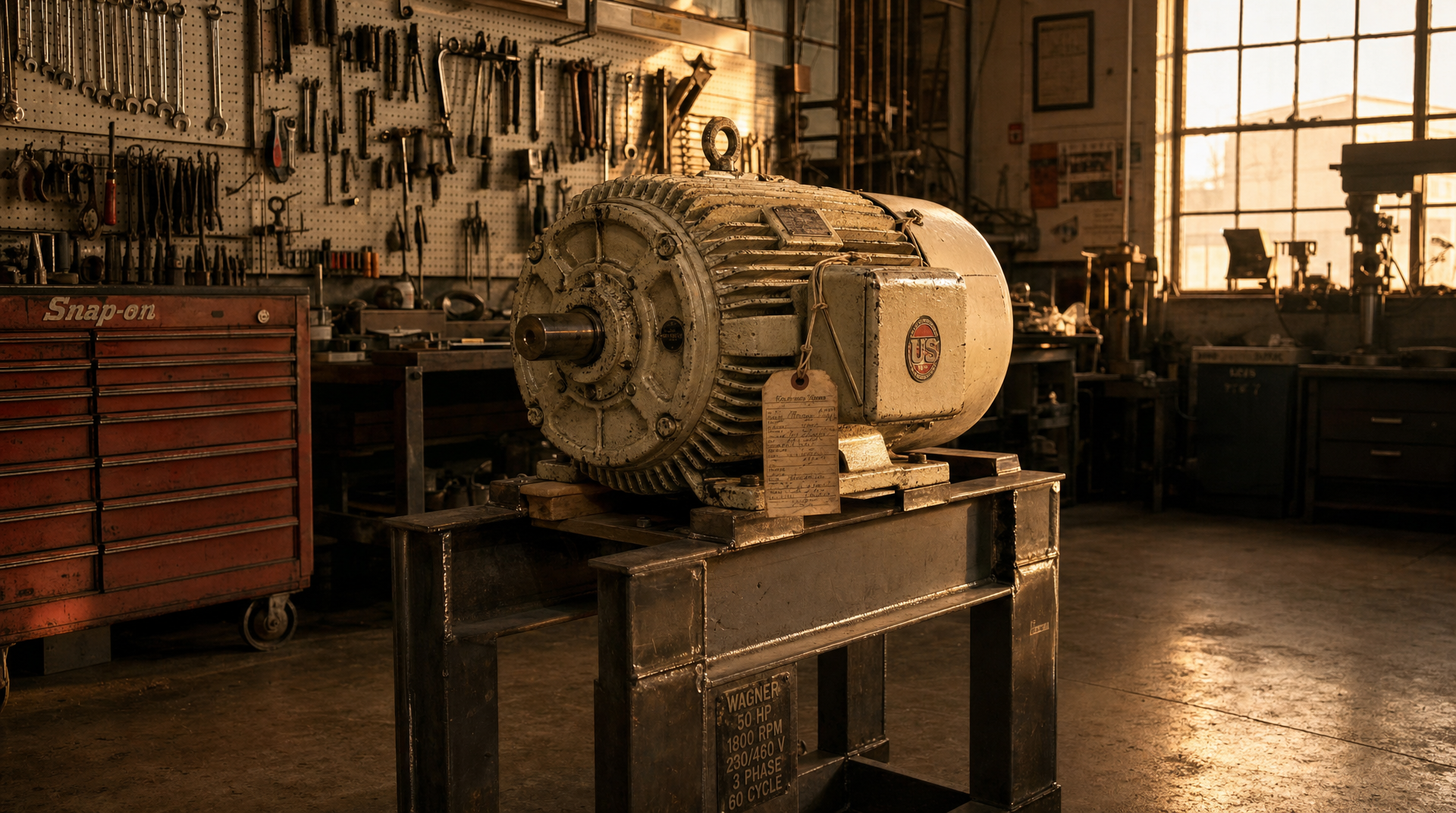
Operating environment
Heavy-duty reliability and service decisions matter, while safety, productivity, and downtime claims need approved evidence.

Industry guide
Connect large motors, rotating equipment, repair workflows, fielded assets, haulage and processing support equipment, and maintenance records to method fit, documentation needs, and support expectations for Mining.
Industry guide
Maintenance leaders, reliability teams, repair partners, and technical stakeholders need a testing path that connects large motors, rotating equipment, repair workflows, fielded assets, haulage and processing support equipment, and maintenance records with documentation needs, method limits, product fit, and support expectations.
Mining teams need practical motor testing guidance tied to harsh use, repair workflow, and service confidence without unsupported mine-specific claims. MDS keeps the conversation useful without relying on customer-specific examples or unapproved performance claims.
Real-world context
Heavy-duty reliability and service decisions matter, while safety, productivity, and downtime claims need approved evidence.

Each method needs to be matched to the asset, process, and decision.
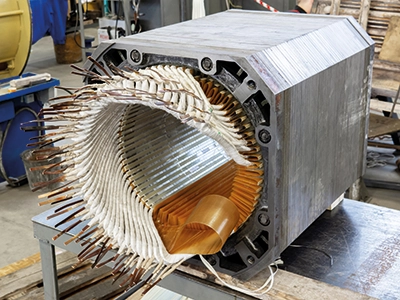
Support matters because distributed assets and repair cycles make practical service routing part of the product decision.
Quick knowledge
Use these points to decide whether the route is answering a method question, an industry question, a product-fit question, or a support question.
Heavy-duty reliability and service decisions matter, while safety, productivity, and downtime claims need approved evidence.
Large motors, rotating equipment, repair workflows, fielded assets, haulage and processing support equipment, and maintenance records.
Maintenance records, shop findings, service context, and product fit should be easier to discuss after reviewing the guidance.
Compare methods for this industry, then confirm product fit, support expectations, and documentation needs with MDS.
Industry problem
Mining and heavy-duty maintenance environments create a different motor testing conversation than a broad catalog overview can handle. The team may be dealing with large motors, rotating equipment, repair workflows, fielded assets, haulage and processing support equipment, and maintenance records, but the deeper question is how the method, product path, documentation need, and support model fit the real work.
Maintenance leaders, reliability teams, repair partners, and technical stakeholders do not all arrive with the same question. One reader may be evaluating a production process. Another may be trying to improve service records. Another may be comparing product families. Each path should make the next step clear without turning the guide into a catalog.
Mining teams need practical motor testing guidance tied to harsh use, repair workflow, and service confidence without unsupported mine-specific claims. That is why the path starts with the operating environment, then shows how methods and products map to real decisions.
The industry guide explains the industry-specific problem, then routes the reader into the method matrix, product paths, Service / Support route, and application-specific solution routes.
Operating context
Heavy-duty reliability and service decisions matter, while safety, productivity, and downtime claims need approved evidence. That pressure shapes the testing conversation. A shallow explanation says MDS serves the industry. A useful explanation shows how the testing decision changes because of the industry.
Asset context matters: large motors, rotating equipment, repair workflows, fielded assets, haulage and processing support equipment, and maintenance records. Those details help teams see that method selection is not abstract. It is tied to the motor, the process, the records, the operator, and the support expectations that follow the system after purchase.
Maintenance records, shop findings, service context, and product fit should be easier to discuss after reviewing the guidance. This gives the industry guide a practical role. It improves the first conversation by showing what the team should bring to MDS.
The guidance also sets limits. Avoid unapproved claims related to mine names, safety compliance claims, production loss claims, and asset-fleet statistics. Strong guidance comes from clarity and specificity rather than unsupported outcomes.
Method matrix
The method matrix shows how surge testing, partial discharge testing, insulation resistance, resistance measurement, production testing, field testing, quality control, service support, custom test cell planning, and EV-specific testing can each fit or not fit this vertical.
The point is not to make every method look equally important. The point is to show the decision tree. A method may be useful for winding evaluation, documentation, repair workflow, production release, running asset context, or service planning. Those distinctions should stay clear.
Product fit should stay connected to method fit. Some paths may lead toward MTC2 R7, MTC3, GLP3, MotorAnalyzer3, Dynamic Motor Analyzer, VoltageAnalyzer, EncoderAnalyzer, custom systems, or MDS support conversations. Treat those as product paths to discuss, not final prescriptions.
Each method in the matrix links into the relevant application route, with Service / Support and Contact close enough to use when the method fit is not obvious.
Other methods for this industry
Use this matrix to move from one method into the adjacent pages that may fit the same operating environment.
Decision safeguards
Start by asking whether the route is solving the right problem. If the issue is production release, move toward production and quality paths. If the issue is field service, move toward maintenance and support paths. If the issue is high-scrutiny winding evaluation, move toward the relevant technical methods.
Also ask what is not being claimed. Do not rely on financial outcomes, avoided downtime, performance guarantees, compliance, customer usage, or exact service commitments unless approved evidence supports those claims. That restraint respects the scrutiny technical reviewers bring.
Support matters because distributed assets and repair cycles make practical service routing part of the product decision. Support belongs inside the industry conversation because product confidence and ownership confidence are connected for MDS customers.
The next step is to use the method matrix to choose the closest path, then bring the asset, process, documentation needs, and support concerns to MDS. That turns the industry guide into an application conversation.
FAQ
The relevant methods can include surge, partial discharge, insulation resistance, resistance measurement, production testing, field testing, quality control, service support, custom test cell planning, and EV-specific testing. The best path depends on large motors, rotating equipment, repair workflows, fielded assets, haulage and processing support equipment, and maintenance records.
Mining teams need practical motor testing guidance tied to harsh use, repair workflow, and service confidence without unsupported mine-specific claims. A dedicated industry guide helps teams compare method fit, product fit, documentation, and support context without starting from a generic catalog page.
Prepare the motor or asset type, operating environment, current test process, documentation needs, support concerns, and the decision the test result needs to support.
No. The guide can show likely product paths, but final product fit depends on the application, method, workflow, documentation needs, and support expectations.
The matrix shows adjacent method paths for the same industry, so teams can compare testing options without losing the vertical context.
The guide avoids unapproved claims related to mine names, safety compliance claims, production loss claims, and asset-fleet statistics. Those claims need approved evidence before they are used.
Support matters because distributed assets and repair cycles make practical service routing part of the product decision. Support is part of the product decision, especially when teams need training, service, calibration planning, or practical application help.
Talk to MDS when the team needs to connect a method to the asset, product family, documentation requirement, operator workflow, service expectation, or specification path.