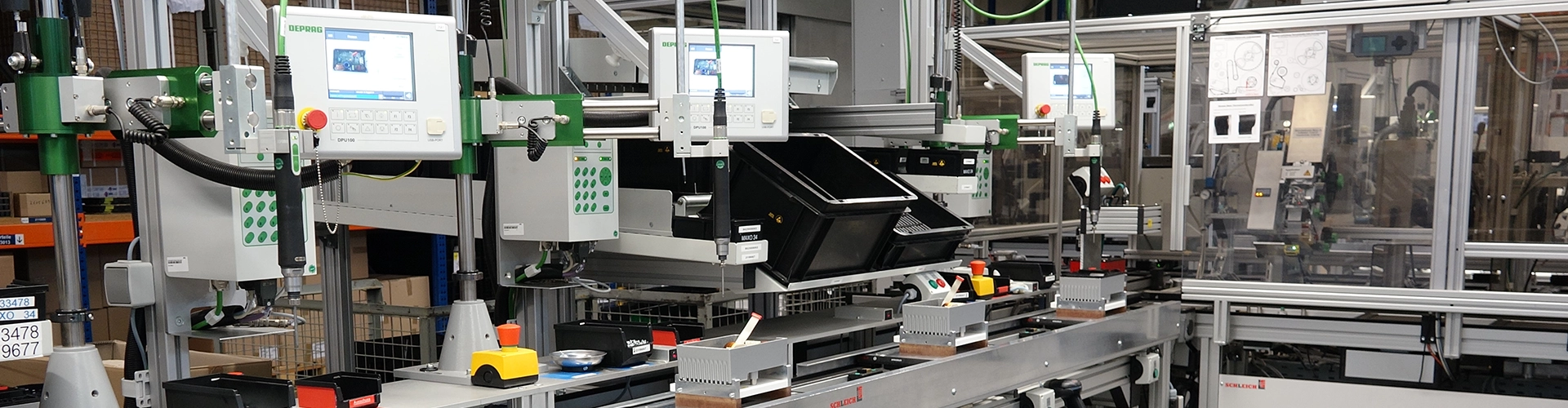
Defense and military
Defense and military decisions depend on the operating context.


End-of-line production testing / Defense and military
Use end-of-line production testing to connect qualification, documentation, and support context with product fit, support planning, and the right application review.
Application guide
Engineering, maintenance, quality, procurement, and technical evaluation teams do not need a generic method description. They need to know how end-of-line production testing fits mission-critical rotating equipment, motors, generators, repair records, fielded assets, and controlled documentation processes, what it can clarify, what it does not prove, and when the application deserves MDS review before a system is specified.
Schleich product information for GLP3 and MTC3 supports production, quality assurance, automation, complex test benches, integrated lines, safety testing, function testing, and winding testing. For Defense and military, MDS keeps the conversation tied to documented method context, application details, and product-fit boundaries.
Before specification: Confirm product fit, documentation needs, standards-sensitive wording, and support path with MDS.
Real-world context
Defense and military decisions depend on the operating context.
End-of-line production testing guidance stays connected to the equipment and motor being tested.
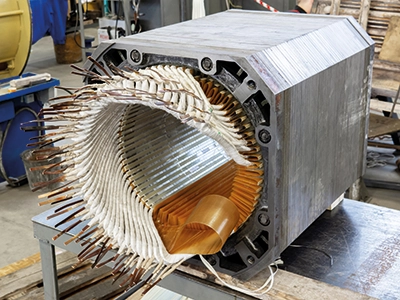
Every solution path connects service, support, and documentation to the next step.
Quick knowledge
Use these points to decide whether the route is answering a method question, an industry question, a product-fit question, or a support question.
How to make repeatable production decisions before a motor or component leaves the line.
Method fit, product fit, documentation discipline, and support context matter more than dramatic claims.
GLP3, GLP3-M, MTC3, MTC2 R7, and custom test paths where the production process supports them.
Motor type, process, environment, documentation need, support expectation, and the decision the test result must support.
Start with the problem
Engineering, maintenance, quality, procurement, and technical evaluation teams come to end-of-line production testing with a real operational question already in motion. They may be reviewing mission-critical rotating equipment, motors, generators, repair records, fielded assets, and controlled documentation processes, trying to improve a production or service process, or deciding whether a motor testing system can support a more defensible decision. The first step is not to make end-of-line production testing sound universal. It is to ask what problem the team is trying to resolve and whether this method belongs in that specific environment.
For this vertical, the basic issue is that defense guidance needs to be useful without revealing sensitive examples or implying program-specific approval. That changes how the method should be evaluated. A generic description would explain the name of the test and stop there. A useful path explains what the method helps the team think through, where it fits inside the work, and why the next conversation should include product fit, support, documentation, and application limits.
The goal is to reduce uncertainty and keep the recommendation matched to the application. End-of-line testing belongs where repeatability, cycle flow, fixture design, operator confidence, and records are part of the selection decision. In Defense and military, the method needs to connect to the machines, records, workflow, and support expectations that already shape the decision. The team should be able to tell whether they are asking a method question, a product question, a documentation question, or a support question.
The simplest careful message is this: how to make repeatable production decisions before a motor or component leaves the line. That gives the team a grounded starting point without overpromising what the test can prove. Once the basic problem is clear, the next question is how the vertical changes the testing decision.
Vertical reality
Defense and military support contexts do not create a neutral testing environment. Method fit, product fit, documentation discipline, and support context matter more than dramatic claims. The same method can mean one thing in a repair shop, another thing on a production line, and another thing in a field reliability program. That is why method guidance needs to move beyond definition and into operating context.
The assets in view may include mission-critical rotating equipment, motors, generators, repair records, fielded assets, and controlled documentation processes. That matters because the team is not only evaluating a test method. They are evaluating whether the method fits the asset, whether the product family can support the work, whether operators can use it correctly, and whether the resulting information will help the team make the next decision. Method names are not enough without the operating problem behind them.
For Defense and military, the decision often has to include documentation and support early. Records, repeatability, repair process discipline, and support routing are safer and more useful than unsupported customer-specific evidence. If those needs are ignored, the first conversation starts too far upstream. A better path names what should be known before MDS recommends a product route.
This vertical also has limits that should stay visible. Avoid unapproved claims related to customer names, program names, compliance claims, performance claims, and defense-sensitive details. Careful guidance can still be specific, but it should be specific about the decision shape, not about unsupported outcomes. That makes the guidance more credible to technical reviewers.
Method and product fit
Schleich product information for GLP3 and MTC3 supports production, quality assurance, automation, complex test benches, integrated lines, safety testing, function testing, and winding testing. That documented foundation is enough to explain why end-of-line production testing can belong in the conversation, but it is not enough to choose a system by itself. The team still needs to confirm the asset, test environment, product configuration, documentation needs, and support path.
The likely product conversation can include GLP3, GLP3-M, MTC3, MTC2 R7, and custom test paths where the production process supports them. Those options should not be flattened into one universal recommendation. A production team, service team, reliability engineer, and technical specifier may all care about end-of-line production testing, but they will not need the same configuration, workflow, or support conversation.
Technical fit and practical fit need to meet. The method may answer part of the question, while another method may better support documentation, field service, production flow, or high-scrutiny evaluation. The industry method matrix gives teams a way to compare adjacent methods without leaving the vertical context.
The support layer is part of the technical decision. Teams need to know how North American application guidance and service support will work without exposing sensitive program detail. For a team evaluating Schleich equipment through MDS, support cannot feel like a footnote. Product fit and support fit should be discussed together.
Other methods for this industry
Use this matrix to move from one method into the adjacent pages that may fit the same operating environment.
Limits and next step
Serious teams ask what end-of-line production testing does not prove. The honest answer is that production testing should not be reduced to a single method name because the process, test sequence, automation needs, and documentation are usually the real specification. That limitation does not weaken the method. It makes the guidance more trustworthy because every method has boundaries.
The team should also ask what else belongs in the test plan. Depending on the asset and environment, the answer may involve partial discharge, insulation resistance, resistance measurement, production functional testing, running motor analysis, service support, or documentation planning. Adjacent paths matter because one method name rarely carries the full decision.
This guidance can discuss end-of-line production testing, defense and military support contexts, product categories, and documented product information. It should not rely on customer names, performance guarantees, financial-performance claims, voltage recommendations, compliance conclusions, or support promises that have not been approved.
The next step is a specification conversation with MDS when the team is planning or improving a production process and needs product fit before system selection. That gives the team a clearer reason to bring the motor, operating context, documentation need, and support question into the conversation.
FAQ
Production testing makes sense when the team is trying to understand how to make repeatable production decisions before a motor or component leaves the line. For Defense and military, confirm the motor, process, documentation need, product fit, and support path with MDS before equipment is recommended.
It helps frame how to make repeatable production decisions before a motor or component leaves the line. Production teams rarely need a generic tester. They need a process that fits the line, operator workflow, documentation, automation, and quality gate. The result should be interpreted inside the larger application and not treated as the only motor testing evidence.
The product conversation can include GLP3, GLP3-M, MTC3, MTC2 R7, and custom test paths where the production process supports them. The right path depends on the application, test environment, asset type, and documentation needs.
Production testing should not be reduced to a single method name because the process, test sequence, automation needs, and documentation are usually the real specification. Keep that limit visible so technical reviewers do not mistake method guidance for a complete specification.
Adjacent methods may include surge, partial discharge, insulation resistance, resistance measurement, production functional testing, running motor analysis, custom test cell planning, and service or calibration support. The best path depends on the decision the team needs to make.
No. Use this guide to frame the right questions. Standards-sensitive wording, compliance conclusions, and customer-specific requirements should be reviewed with MDS before they become specification language.
Teams need to know how North American application guidance and service support will work without exposing sensitive program detail.
Talk to MDS when the team is planning or improving a production process and needs product fit before system selection. That conversation should include the motor, operating context, test objective, support need, and documentation expectations.